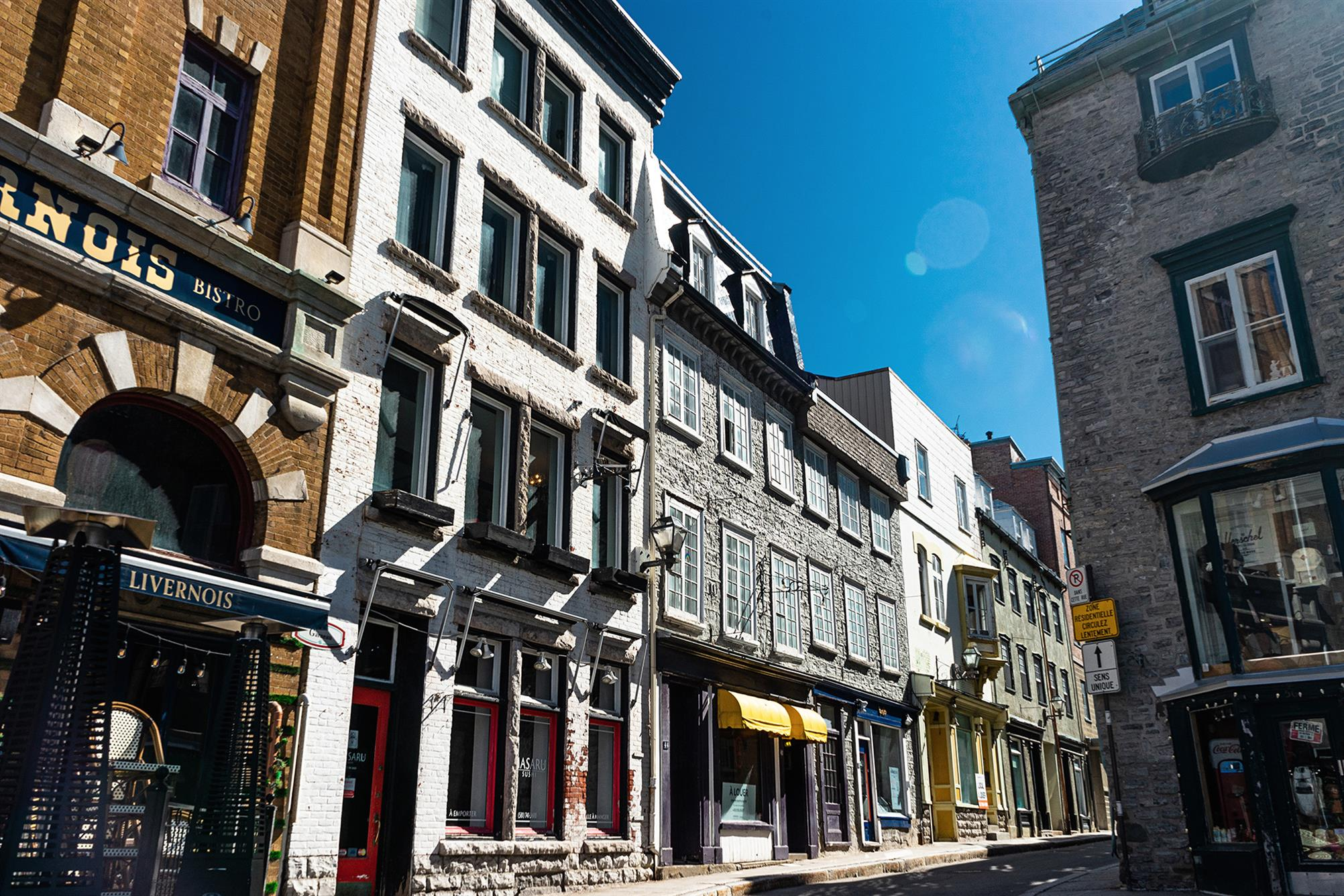
Quebec City enters 2026 in a position that few major North American real estate markets can match. The hyperactivity of the post-pandemic years has settled into a more balanced rhythm, prices remain accessible relative to other Canadian metros, vacancy rates support landlords, and demographic momentum continues to point upward. For investors trying to read where the market is heading and how to position themselves accordingly, this year offers both clarity and opportunity. Understanding the forces shaping Quebec City in 2026 separates investors who time their moves well from those who simply react to last year’s news.

The Macro Forces Shaping Quebec City in 2026
Several large forces are reshaping the Canadian real estate landscape, and Quebec City sits at the intersection of trends that favor it disproportionately.
Affordability Migration From Major Metros
The persistent affordability crisis in Toronto, Vancouver, and increasingly Montreal continues to drive Canadian households to look elsewhere. Quebec City has emerged as a primary destination for those who want urban amenities, professional opportunities, and a manageable cost of living. Frédéric Murray, who has tracked Quebec City migration patterns through nearly two decades at the helm of Groupe Murray, observes that the inflow from larger Canadian cities accelerated noticeably in late 2024 and continues steadily through 2026.
Stabilized Interest Rate Environment
After the sharp rate increases of 2022 and 2023 and the gradual easing that followed, mortgage rates in 2026 have entered a period of relative stability. Investors and buyers can now plan with reasonable confidence, lenders are competing more actively for quality borrowers, and the volatility that paralyzed transactions in recent years has receded. This stability favors deliberate, well-analyzed investment decisions.
Population Growth and Immigration
Quebec City’s population continues to grow steadily, with immigration playing an increasing role. The city’s housing supply has not kept pace, creating sustained pressure on rents and prices. Unlike speculative demand that can vanish suddenly, demographic demand builds gradually but reliably, providing a foundation that supports property values over the long term.
Technology and Knowledge Economy Expansion
Quebec City’s economic base has diversified well beyond its traditional government and tourism foundations. The technology sector, particularly in artificial intelligence and digital industries, has grown significantly. The insurance industry continues to anchor the local economy. Healthcare and education employ thousands of high-quality jobs. This diversification reduces the city’s exposure to any single sector and supports housing demand from multiple income segments.
What Different Property Segments Look Like in 2026
The headline question for most investors is which segment to focus on. The answer depends on goals, capital, and risk tolerance, but the relative positioning of each segment can be sketched clearly.
Single-Family Homes
Quebec City’s single-family market remains relatively balanced in 2026. Inventory has recovered from historic lows, prices have stabilized after the corrections of 2023 and 2024, and buyer activity is steady without being frantic. Average prices range from approximately $400,000 in outlying districts to $1.2 million and above in premium neighborhoods like Sillery, Montcalm, and parts of Sainte-Foy. Appreciation in 2026 is expected to be modest but positive, with the strongest performance in established neighborhoods near amenities and transit.
Small Multi-Unit Buildings (Duplexes and Triplexes)
This segment remains the workhorse of Quebec City’s investor market. Demand from first-time investors continues strong, financing remains accessible through residential mortgage programs, and cash flow in good neighborhoods is genuinely positive. Pricing has held firm through 2025 and into 2026, with cap rates in central districts typically between 5% and 6%. Investors entering this segment in 2026 face moderate competition but reasonable entry prices.
Medium Multi-Unit Buildings (Five to Fifteen Units)
The most strategically interesting segment for investors with sufficient capital and operational capacity. Cap rates here have widened slightly compared to small multi-units, often reaching 5.5% to 6.5% for quality properties in good neighborhoods. The buyer pool is smaller, financing requires commercial-grade analysis, and competition is less intense than at smaller scales. This is where serious portfolio building accelerates.
Heritage and Prestige Properties
Performance in this segment continues to defy broader market patterns. Supply remains structurally constrained by protection regulations, demand from both residents and investors remains strong, and prices have appreciated steadily. The investment thesis here is not about cash flow yield; it is about durable value preservation and long-term appreciation in assets that cannot be replicated.
Mixed-Use and Commercial Properties
The commercial side of Quebec City’s real estate market has shown remarkable resilience. Tourism continues to grow, ground-floor commercial spaces in heritage and central districts perform well, and longer commercial lease structures provide income stability. Investors with the expertise to evaluate commercial tenants and bail structures find compelling opportunities here, often at higher yields than residential alternatives.

Geographic Trends Worth Watching
Quebec City is not a single market. It is a collection of distinct neighborhoods, each on its own trajectory. The neighborhoods that will outperform in 2026 and beyond share specific characteristics.
Neighborhoods Showing Strong Momentum
- Saint-Roch continues its multi-year evolution into a technology and creative hub. Property values have appreciated consistently, but the trajectory still has room to run as more businesses and residents discover what the neighborhood has become.
- Limoilou offers the best combination of value and momentum. The neighborhood retains its working-class character while attracting young professionals, restaurateurs, and investors. Cap rates remain attractive while appreciation prospects look strong.
- Saint-Sauveur is the next neighborhood many investors are watching. Currently still in the early stages of revitalization, it shares characteristics that Saint-Roch had a decade ago, with prices that remain accessible.
Established Premium Neighborhoods
- Montcalm and Saint-Jean-Baptiste continue to perform reliably with strong rental demand and steady appreciation. Entry prices are elevated but cash flow remains workable for patient investors.
- Sillery offers stability and prestige with limited downside risk. Less momentum than the urban core but a defensive position for capital preservation.
- Old Quebec remains a category unto itself, dominated by heritage protection economics and tourism-related demand.
Emerging and Watch-List Areas
- Vanier offers some of the most accessible prices in Quebec City while sitting adjacent to neighborhoods that have already appreciated significantly. Investors with longer time horizons find compelling opportunities here.
- Beauport combines accessible prices with proximity to the river, growing services, and reasonable commutes to downtown. Better suited to investors seeking larger buildings with strong cash flow.
The Regulatory Environment in 2026
Quebec City investors operate within a regulatory framework that has evolved meaningfully over the past several years. Understanding the current state helps in planning.
Tribunal Administratif du Logement Realities
The TAL continues to play a central role in landlord-tenant relations. Rent adjustments remain constrained by formal processes, evictions for cause require proper documentation and patience, and major repairs trigger specific notification and compensation rules. Investors who understand the system work within it effectively. Those who try to bypass it create expensive problems.
Short-Term Rental Constraints
The regulatory framework for short-term rentals has tightened substantially. CITQ registration is mandatory, municipal zoning rules vary by neighborhood, and enforcement has become more rigorous. Investors considering this strategy in 2026 must verify regulatory eligibility before purchase, not after.
Municipal Initiatives Worth Tracking
Quebec City’s municipal government has signaled various initiatives that affect real estate. Infrastructure investments, public transit developments (including potential streetcar or BRT initiatives), and zoning reviews in select neighborhoods all create opportunities for prepared investors.
Provincial Tax Changes
Various changes to capital gains treatment, property tax frameworks, and rental income reporting continue to evolve at both provincial and federal levels. Working with a qualified accountant familiar with Quebec real estate is essential.
Investment Strategies Aligned With 2026 Conditions
Different strategies fit different market environments. Several approaches align particularly well with current Quebec City conditions.
Buy and Hold in Central Neighborhoods
The classic approach remains effective in 2026. Quality properties in stable or appreciating neighborhoods, financed conservatively, managed professionally, and held across cycles continue to build wealth reliably. The key is choosing carefully and resisting the temptation to chase yield in declining areas.
Value-Add Repositioning
Buying buildings that underperform their potential, improving them through targeted renovations and operational improvements, and capturing the value created remains one of the highest-return strategies for active investors. Quebec City has plenty of buildings whose owners have not optimized them, creating opportunities for buyers willing to do the work.
Geographic Concentration
Building a portfolio concentrated in one or two specific neighborhoods produces operational efficiencies that scale-distributed portfolios cannot match. Tenants, contractors, and market knowledge all compound around concentration. This is the strategy that has built the Groupe Murray Immeubles Murray portfolio over nearly two decades.
Heritage and Long-Term Hold
For investors with substantial capital and a multi-decade horizon, heritage properties in protected districts continue to offer the most durable wealth preservation available in the Quebec City market. Lower yields but exceptional structural advantages.

Risks Worth Acknowledging
No outlook is complete without acknowledging what could go wrong. Several risks deserve consideration as you position for 2026 and beyond.
Interest Rate Reversal
The current rate environment is favorable but not permanent. A return to higher rates would pressure refinancing strategies, slow buyer demand, and compress investor cash flows. Stress-testing portfolios against higher rate scenarios is prudent.
Economic Recession
Canadian economic conditions remain uncertain, and a meaningful recession would affect rental demand, employment, and property values. Quebec City has historically held up better than most Canadian markets during downturns, but no market is immune.
Regulatory Tightening
Further restrictions on landlord operations, rent control mechanisms, or short-term rentals could affect investment economics. Staying informed and engaged with regulatory developments matters.
Construction Cost Pressures
Renovation and maintenance costs have escalated significantly over the past several years. Even with prices stable, the operating side of property ownership has become more expensive. Conservative reserves are more important than they used to be.
How to Position for the Year Ahead
The investors who will look back on 2026 favorably are those who acted with discipline, deployed capital strategically, and avoided the obvious mistakes that catch less-prepared investors.
- Maintain reasonable leverage that survives stress scenarios.
- Concentrate in neighborhoods you understand deeply rather than scattering across markets.
- Buy on the numbers, not the story — quality cash flow today beats speculative appreciation tomorrow.
- Build operational infrastructure that supports portfolio growth without requiring constant attention.
- Stay engaged with the market through trusted advisors, professional networks, and ongoing education.
The Value of Local Expertise in Navigating 2026
Quebec City’s real estate market rewards local knowledge in ways that less-distinctive markets do not. The differences between neighborhoods, the nuances of building age and construction, the regulatory environment, and the cultural and linguistic context all create complexity that outside investors find genuinely difficult to navigate alone.
The Groupe Murray, led by Frédéric Murray, has spent nearly two decades building precisely the kind of local expertise that translates market conditions into successful investment decisions. The integrated services of Frederic Murray Management for operations, Frederic Murray Rentals for tenant performance, and the broader Immeubles Murray portfolio expertise provide a complete framework for investors at every stage. Whether you are evaluating your first Quebec City property or expanding an established portfolio, contacting Frédéric Murray and his team brings clarity to the strategic choices that 2026 will demand.

