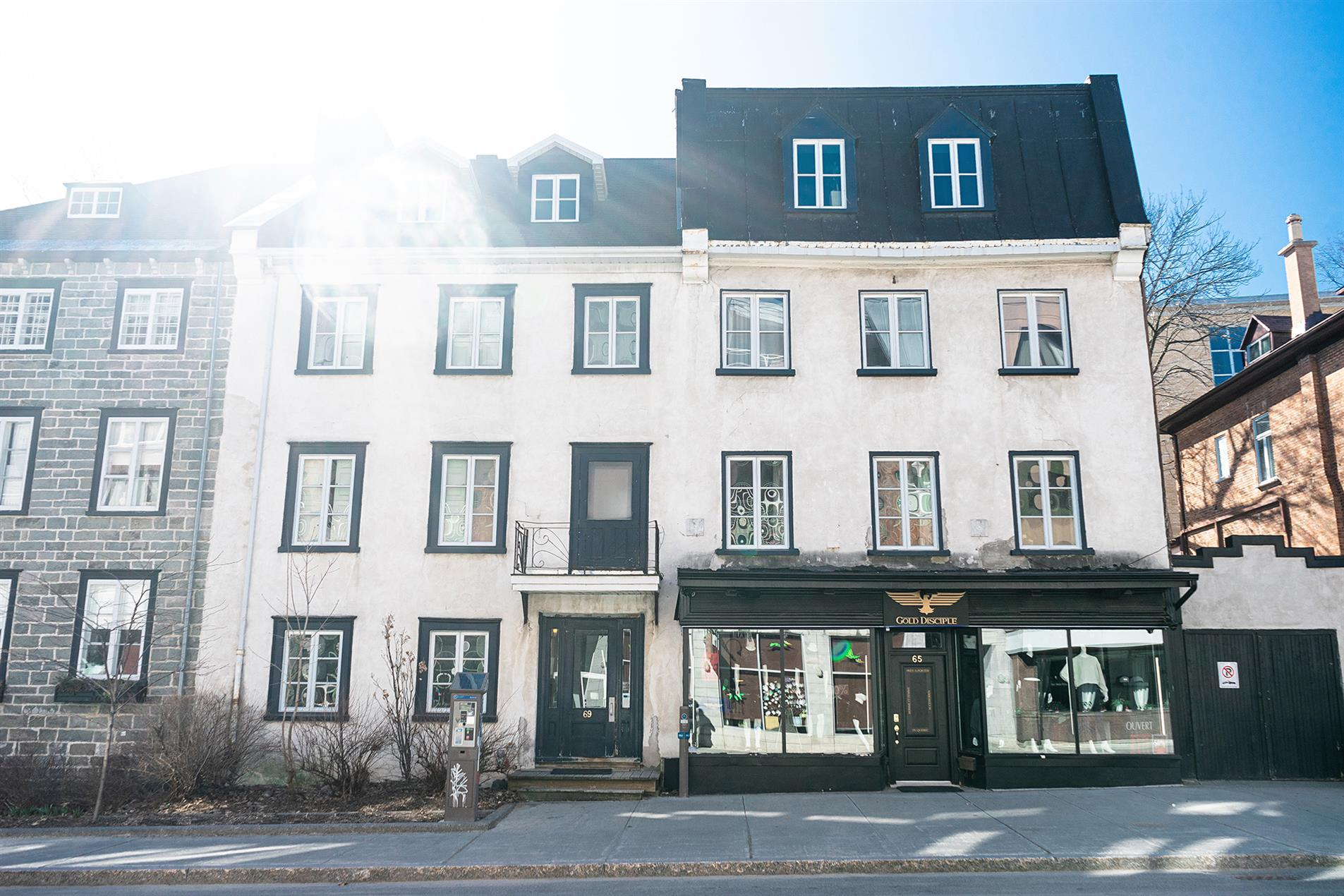
The remote work shift that reshaped where people chose to live between 2020 and 2023 did not reverse. It matured. In 2026, the buyers arriving in Quebec City’s real estate market include a significant and growing cohort of professionals who work entirely or primarily from home — and whose property priorities look fundamentally different from the commuter-first buyer who dominated the market a decade ago.
This group is not looking for the shortest drive to an office tower. They are looking for space, quality of life, neighborhood character, and a property that functions as both a home and a productive work environment. The fact that Quebec City delivers all of these at price points that remain meaningfully below comparable markets in Toronto, Vancouver, or even Montreal has not gone unnoticed. Remote-worker migration into Quebec City has been a quiet but consistent market dynamic since 2021, and in 2026 it continues to shape demand patterns in ways that both buyers and investors need to understand.
Frederic Murray Properties has watched this shift play out across the Quebec City market in real time, through the properties we manage, the buyers we assist, and the neighborhoods we have observed evolve over two decades. What follows is a practical, opinionated guide to what remote-worker buyers should be looking for, which neighborhoods in Quebec City actually deliver on the lifestyle these buyers are seeking, and how to approach the purchase strategically in 2026.
What Remote-Worker Buyers Are Actually Prioritizing — and How It Differs From Traditional Buyers
Traditional property buyers in Quebec City organized their search around a commute. Distance to downtown, proximity to a specific employer’s campus, or access to the bridges crossing to Lévis shaped neighborhood selection before almost any other factor. The property itself — its size, its character, its relationship to walkable amenities — was often a secondary consideration negotiated within the commute constraint.
Remote-worker buyers invert this hierarchy almost completely. Without a daily commute to anchor the search, the property and its surroundings become the primary selection criteria. This produces a different set of requirements that the Quebec City market is, in many ways, unusually well-positioned to satisfy.
Space is the first priority — specifically, dedicated space for work within the home. A two-bedroom apartment where one bedroom becomes a permanent home office is the minimum viable configuration for most full-time remote workers. Three-bedroom properties with a true third room — not a converted alcove — are in significantly higher demand among this buyer cohort than their traditional market position would suggest. The premium for genuine workspace within a Quebec City residential property has increased materially since 2021 and shows no sign of reversing.
Internet connectivity quality is a requirement that sounds obvious but is often underweighted in the property search. Quebec’s Vidéotron fibre network covers most of Quebec City’s established urban neighborhoods with symmetrical gigabit speeds, but coverage gaps exist in some peripheral and semi-rural areas that might otherwise appeal to remote workers seeking more space per dollar. Buyers should verify specific unit or property connectivity before making decisions based on general neighborhood coverage assumptions.
Walkability to daily amenities — grocery, pharmacy, café, park — matters more to remote workers than to traditional buyers in part because remote workers live within their neighborhoods more fully. A commuter who leaves at 7:30 and returns at 6:00 experiences their neighborhood primarily on evenings and weekends. A remote worker experiences it constantly, and the quality of that immediate environment — how pleasant it is to walk out the door, whether there is a café within ten minutes for a mid-afternoon change of scenery — affects daily life in a way that traditional buyers do not always prioritize but remote-worker buyers consistently do.
The Quebec City Neighborhoods That Work Best for Remote-Worker Buyers in 2026
Not every desirable Quebec City neighborhood serves remote workers equally well. The combination of walkable amenities, property types with genuine workspace potential, character environment, and reasonable price point narrows the field to a handful of areas that consistently appear in remote-worker buyer searches in 2026.
Montcalm is the most obvious candidate, and its profile matches remote-worker priorities well. The neighborhood’s tree-lined streets, concentration of independent cafés and restaurants, access to the Grande Allée corridor, and mix of classic Quebec duplex and triplex housing stock with larger single-family homes makes it genuinely walkable and rich in daily-life quality. The trade-off is price — Montcalm has appreciated significantly and entry points for single-family homes or owner-occupied plexes reflect that demand. Buyers with flexibility on property type find better value in upper-floor apartments within older buildings that have been updated to modern electrical and connectivity standards.
Saint-Jean-Baptiste offers a comparable lifestyle profile at a slightly more accessible price point in some segments. The neighborhood is denser, more urban in character, and its proximity to the Saint-Jean commercial corridor provides the walkable café and amenity density that remote workers specifically seek. Properties here are predominantly older multi-unit buildings, and buyers looking for ownership should explore the plex purchase with owner-occupancy model — acquiring a duplex or triplex, living in one unit, and renting the others — which provides both the owned space and the income offset that makes the purchase economics more comfortable.
Limoilou has undergone the most visible evolution of any Quebec City neighborhood over the past decade and in 2026 represents the strongest value proposition for remote-worker buyers who are willing to prioritize lifestyle quality and price over prestige address. The 3e Avenue and Cartier corridors have developed into genuinely excellent walkable commercial strips with independent restaurants, specialty grocery, and café culture that rivals Montcalm at a fraction of the property cost. Heritage character properties in Limoilou — particularly converted duplexes and triplexes with original trim and quality bones — offer the spatial and character qualities that remote workers seek at entry points that the more established neighborhoods cannot match.
Sainte-Foy, which many people think of primarily as a suburban shopping corridor, deserves more nuanced consideration for remote-worker buyers. Its proximity to Université Laval, the development of the Robert-Bourassa corridor, and the presence of large, well-maintained properties with genuine home office space — including detached homes that rarely appear in the urban core — make it a practical option for remote workers who prioritize space over walking-distance café culture. Connectivity is strong, the research park and university community provide intellectual environment, and transit to central Quebec City has improved.

The Property Types That Serve Remote Workers Best — and the Ones That Disappoint
Property type matters as much as neighborhood for the remote-worker buyer profile, and the mismatch between what buyers think they want and what actually serves their work-life needs is common enough to be worth addressing directly.
The studio and one-bedroom apartment — attractive for its price point — consistently disappoints remote workers within the first year of ownership. Without a dedicated room for work, the psychological separation between work and home dissolves, and the benefits of remote work in a high-quality environment are undermined by the constant ambient presence of the work setup in the living space. Buyers who are tempted by one-bedroom pricing should honestly assess whether they can work productively without a dedicated room before committing.
The classic Quebec duplex purchased for owner-occupancy is, for many remote-worker buyers in Quebec City, the best structural solution available. The owner occupies the larger unit — typically three to four bedrooms — while renting the second unit at market rates that meaningfully offset the carrying cost. The rental income reduces the effective mortgage payment, the property provides genuine workspace, and the ownership structure builds equity in an asset that also generates cash flow. In Limoilou or Saint-Jean-Baptiste in 2026, a duplex purchase at $550,000 to $750,000 with a market-rate rental unit generating $1,100 to $1,400 per month produces a net carrying cost that compares favorably to renting a comparable space outright.
Larger single-family detached homes in Sainte-Foy or the Lévis region offer the most raw space — including the possibility of a dedicated home office suite, a guest room, and outdoor space — at price points that buyers from Toronto or Vancouver consistently describe as remarkable. The trade-off is walkability, which is lower in these areas than in the urban core neighborhoods. For remote workers whose work requires deep focus and who do not depend on the spontaneous social texture of an urban street for energy, this trade-off is often acceptable.
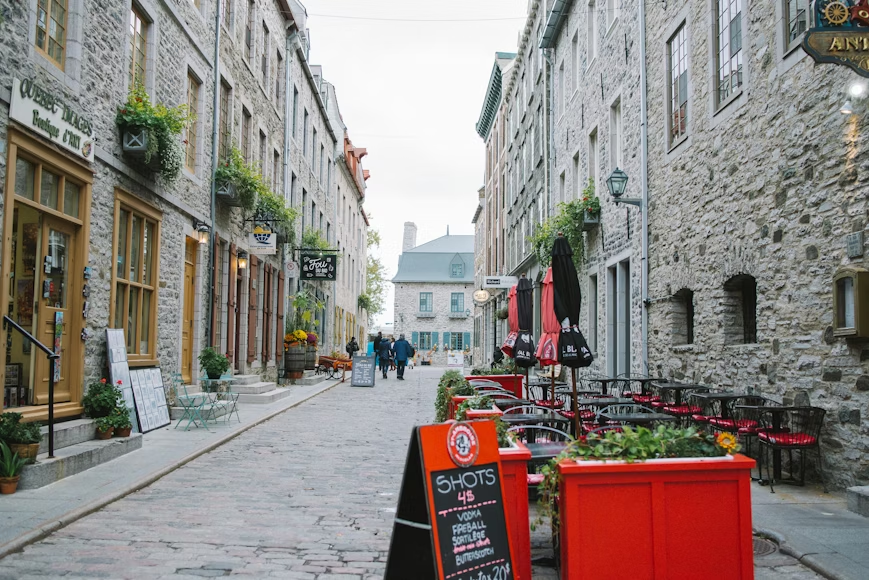
Heritage character properties — the stone-and-brick buildings that define Quebec City’s visual identity — command a lifestyle premium that remote-worker buyers from outside the region consistently respond to. The aesthetic quality of working from a heritage-designated Quebec City property, with original hardwood floors, high ceilings, and architectural detail, is a genuine quality-of-life differentiator that photographs well and lives even better. The carrying costs and maintenance considerations of these properties are real — Frédéric Murray Estates covers this in detail — but for buyers who understand them and budget accordingly, the heritage property option delivers a work-from-home environment that purpose-built modern construction cannot replicate.
How Remote-Worker Buyers Should Approach the Quebec City Purchase Strategically in 2026
The property search strategy for a remote-worker buyer in Quebec City benefits from a few adaptations to the conventional buyer approach that reflect the specific priorities of this cohort.
First, expand the geographic search radius beyond the initial instinct. Remote-worker buyers from larger cities often anchor their Quebec City search to the same central neighborhoods they would have prioritized as commuters — the historic district, Montcalm, central Sainte-Foy. Expanding the radius to include Limoilou, Saint-Roch, Lebourgneuf, or the Lévis riverfront reveals price-to-quality ratios that the most central neighborhoods cannot offer. A buyer who is not constrained by a commute has no logical reason to pay the Montcalm premium unless the specific lifestyle of that neighborhood is the primary objective.
Second, weight connectivity verification heavily in the due diligence process. Before making an offer on any property, confirm the specific internet service available at that address — not the general availability in the neighborhood — and verify that the upload and download speeds available are sufficient for your work requirements. Video conferencing, cloud-based collaboration, and large file transfers have different bandwidth requirements, and the difference between adequate and excellent connectivity matters in daily work life in a way that most traditional due diligence processes do not capture.
Third, think explicitly about how the property will function during the full working day across all seasons. A Quebec City property that feels perfect in May — flooded with natural light, easy outdoor movement, comfortable temperatures — performs very differently in February, when 300 centimetres of snowfall has accumulated, temperatures are consistently below minus fifteen, and the outdoor café culture that animated the neighborhood choice is dormant. Remote workers who have not experienced a Quebec winter should either visit during February before committing or take local advice about how a specific property performs in cold-weather conditions seriously.

What the Quebec City Market Offers That Other Remote-Work Destinations Do Not
The remote-work migration to secondary cities that accelerated after 2020 produced a predictable pattern: buyers discovered desirable smaller cities, drove up prices, and eventually reproduced many of the affordability challenges they had sought to escape. Quebec City has been less affected by this dynamic than cities like Kelowna, Victoria, or Halifax — in part because the French-language environment creates a natural filter on migration that reduces the volume of interprovincial and international remote-work buyers who self-select for the Quebec City market.
The result, in 2026, is a market where the lifestyle quality-to-price ratio remains genuinely exceptional by Canadian standards. Properties that would cost $1.2 million in a comparable Victoria neighborhood or $1.5 million in a comparable Halifax location are available in Quebec City’s best neighborhoods at $600,000 to $850,000. The food culture, the architectural heritage, the four-season outdoor recreation, the public safety, and the community coherence that make Quebec City an exceptional place to live are all present — and they are present at prices that have not yet been arbitraged to the level of Canada’s most popular remote-work destinations.
For buyers who are seriously evaluating Quebec City as a remote-work base in 2026, Frederic Murray Properties offers both the property knowledge and the neighborhood fluency to match buyers with the specific property type and location that serves their actual lifestyle and work requirements — not just the ones that look best in a listing. Reach us through fredericmurrayproperties.com to start the conversation.

