The difference between a real estate investment that builds wealth and one that destroys it is almost never visible at the showing. It lives in the details — the ones that a prepared buyer uncovers through systematic due diligence and that an unprepared one misses entirely until the purchase is complete and the cost of discovery is unavoidable.
Due diligence is the process of verifying everything you believe to be true about a property before you commit to buying it. It is not pessimism or excessive caution. It is the professional standard applied by every serious real estate investor, and it is the single most reliable way to protect your capital and your confidence in every property decision you make.
At Frederic Murray Properties, we guide buyers through this process across every property type — residential, multi-unit, commercial, and luxury. This framework gives you the complete picture of what due diligence actually involves and why each component matters.
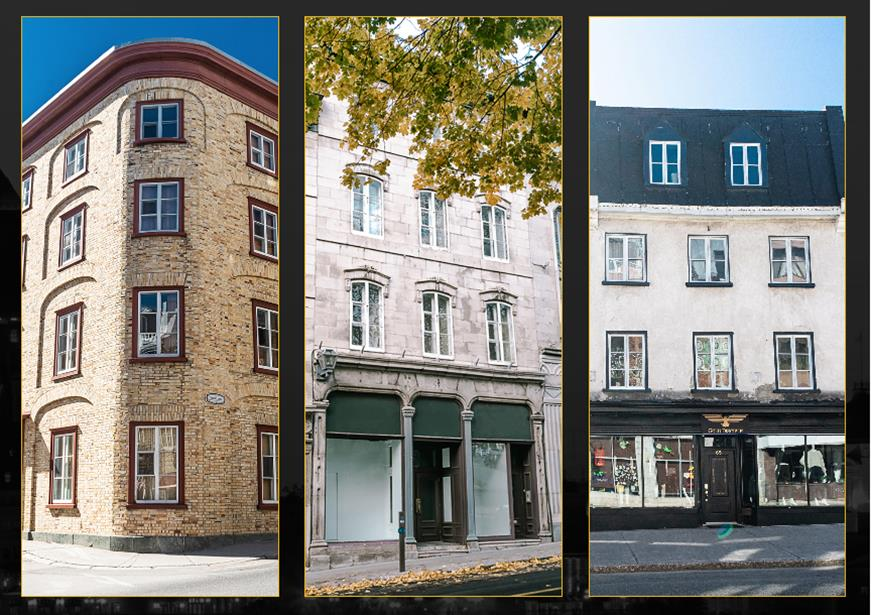
![[IMAGE 1: Hero image — Stunning Quebec City skyline featuring historic architecture and modern buildings along the St. Lawrence River, or aerial view of Montreal's diverse neighborhoods] Canadian real estate markets receive constant attention from investors worldwide, but Quebec often remains underappreciated compared to Toronto and Vancouver. This relative obscurity creates opportunity. While other markets grab headlines with dramatic price swings, Quebec delivers consistent performance that rewards patient, informed investors. Frédéric Murray recognized Quebec's potential when founding Groupe Murray nearly twenty years ago. While others chased hotter markets, he built Immeubles Murray by focusing on fundamentals that drive sustainable returns. Today, that portfolio stands as testament to Quebec's enduring investment appeal. Quebec's Economic Foundations Strong real estate markets require strong economic foundations, and Quebec delivers on multiple fronts. The province boasts a diversified economy spanning aerospace, technology, healthcare, education, financial services, and natural resources. This diversity provides resilience—downturns in any single sector don't devastate the broader economy. Montreal has emerged as a leading technology hub, attracting major investments from global companies and nurturing a vibrant startup ecosystem. Quebec City anchors government employment while developing its own technology and tourism sectors. Regional centers provide stability through healthcare, education, and resource industries. Employment diversity translates to rental demand diversity. Immeubles Murray properties attract tenants across industries, reducing exposure to any single employer or sector. Frédéric Murray prioritized this diversification when building the Groupe Murray portfolio, recognizing that broad-based demand creates stable, sustainable returns. [IMAGE 2: Economic diversity visual — Montreal tech district with modern office buildings, Quebec City's business district, or collage showing various industries: aerospace, healthcare, technology, education] Affordability Advantage Quebec offers remarkable affordability compared to other major Canadian markets. Montreal housing costs significantly less than Toronto or Vancouver, yet the city provides comparable urban amenities, cultural offerings, and economic opportunities. This value proposition attracts residents from across Canada and internationally. Affordability benefits investors in multiple ways. Lower acquisition costs mean smaller capital requirements to enter the market. More accessible pricing allows broader tenant pools, reducing vacancy risk. The gap between Quebec prices and other markets creates potential for continued appreciation as more people discover this value. For tenants, Quebec's affordability translates to sustainable housing costs. Residents can afford their apartments without excessive financial strain, leading to reliable rent payments and longer tenancies. This stability benefits property owners through consistent cash flow and reduced turnover costs. Groupe Murray's investment thesis has always incorporated Quebec's affordability advantage. Frédéric Murray understood that sustainable returns require sustainable tenant economics. Immeubles Murray rents remain accessible to working families while generating appropriate returns for investors. Demographic Tailwinds Quebec's demographics support continued housing demand. Immigration adds population steadily, with Quebec attracting newcomers seeking French-speaking environments, educational opportunities, and affordable living costs. International students attending Quebec's renowned universities often remain after graduation, adding to housing demand. Internal migration patterns also favor Quebec. Residents of more expensive provinces increasingly consider Quebec for its lower living costs and high quality of life. Remote work expansion accelerates this trend, allowing people to earn incomes from anywhere while enjoying Quebec's affordability. Household formation trends support rental demand specifically. Young adults delay homeownership longer than previous generations, extending their rental years. Older adults increasingly downsize into rental apartments, preferring flexibility and reduced maintenance responsibilities. These demographic shifts sustain rental demand across age groups. Frédéric Murray tracks demographic trends closely when planning Groupe Murray strategy. Immeubles Murray acquisitions target locations and property types aligned with demographic demand patterns, ensuring properties attract tenants reliably for decades to come. [IMAGE 3: Demographic appeal — diverse group of young professionals in urban Quebec setting, students near university campus, or multigenerational community enjoying neighborhood amenities] Regulatory Environment Quebec's rental regulations create a stable, predictable operating environment. While some investors view tenant protections skeptically, experienced operators recognize that balanced regulations benefit everyone. Clear rules reduce disputes, and tenant stability reduces turnover costs. The Régie du logement provides dispute resolution mechanisms that avoid expensive litigation. Standardized lease forms ensure consistent documentation. Rent increase guidelines, while limiting dramatic hikes, allow reasonable annual adjustments that maintain property economics. Professional operators who understand and respect Quebec's regulatory framework thrive within it. Problems arise primarily for those who ignore rules or attempt shortcuts. Compliance-focused management, like that practiced throughout Immeubles Murray, operates successfully within Quebec's system. Groupe Murray maintains strict regulatory compliance across all operations. Frédéric Murray established this commitment early, recognizing that sustainable business requires respecting the framework within which you operate. This approach builds trust with tenants, regulators, and partners alike. Infrastructure Investment Government infrastructure investment signals confidence in Quebec's future and directly enhances property values. Major transit projects improve accessibility to previously underserved areas. Road improvements reduce commute times. Public space investments enhance neighborhood desirability. Montreal's ongoing transit expansion creates opportunity for informed investors. Properties near new stations appreciate as accessibility improves. Neighborhoods previously considered distant become convenient, attracting new residents and commanding higher rents. Quebec City continues developing its infrastructure to support population growth. Municipal investments in roads, utilities, and public spaces accommodate expansion while maintaining quality of life. These improvements support property values throughout the region. Frédéric Murray monitors infrastructure planning closely when evaluating acquisition opportunities. Immeubles Murray includes properties positioned to benefit from announced and anticipated infrastructure investments. This forward-looking approach has driven significant value creation within the Groupe Murray portfolio. [IMAGE 4: Infrastructure and growth — modern Quebec transit system, urban development project under construction, or revitalized public space with people enjoying the amenities] Market Stability Quebec's real estate market historically demonstrates lower volatility than other Canadian markets. While Toronto and Vancouver experience dramatic cycles of appreciation and correction, Quebec moves more steadily. This stability suits investors seeking predictable returns rather than speculative gains. Lower volatility reflects Quebec's economic diversity, reasonable affordability, and balanced regulation. Markets with extreme price appreciation often experience painful corrections. Quebec's moderate, sustainable growth avoids these cycles, protecting investors from dramatic value swings. For income-focused investors, stability matters more than appreciation potential. Predictable cash flows support retirement income, portfolio planning, and reinvestment strategies. Quebec delivers this predictability consistently. Groupe Murray's investment approach prioritizes stable returns over speculative potential. Frédéric Murray built Immeubles Murray targeting sustainable performance rather than maximum short-term appreciation. This philosophy has protected the portfolio through economic cycles while delivering consistent results. Quality of Life Considerations Investment decisions involve more than spreadsheet analysis. Quebec offers exceptional quality of life that enhances its investment appeal. World-class cultural offerings, excellent restaurants, four-season recreation, and vibrant neighborhoods create environments where people want to live. Properties in desirable locations attract and retain quality tenants. Residents who enjoy their neighborhoods stay longer, maintain their apartments better, and create stable communities. Quality of life considerations translate directly into property performance. Quebec's healthcare system, educational institutions, and social services provide residents with security that enhances community stability. These factors may not appear in financial projections but influence long-term property performance nonetheless. Frédéric Murray considers quality of life when evaluating Groupe Murray acquisitions. Immeubles Murray properties occupy locations where residents genuinely enjoy living. This focus on desirability ensures sustained demand regardless of market cycles. Building Wealth in Quebec Real Estate Quebec real estate rewards investors who understand its unique characteristics and commit to long-term strategies. The province offers affordable entry points, stable returns, demographic tailwinds, and quality of life that sustains demand across generations. Success requires local knowledge, regulatory understanding, and patient capital. Quick-flip strategies that work elsewhere may disappoint in Quebec's steadier market. But investors seeking reliable, sustainable wealth building find Quebec exceptionally rewarding. Groupe Murray exemplifies successful Quebec real estate investment. From modest beginnings, Frédéric Murray built Immeubles Murray into a substantial portfolio by applying fundamental principles consistently over two decades. The results demonstrate what disciplined Quebec real estate investment can achieve. Explore Quebec Investment Opportunities Whether you're considering your first Quebec investment or expanding an existing portfolio, understanding the market's unique dynamics positions you for success. Local expertise and established relationships accelerate results and reduce risk. Groupe Murray welcomes investors interested in Quebec real estate. From direct property acquisitions to partnership opportunities within Immeubles Murray, Frédéric Murray's team provides access and expertise that independent investors cannot easily replicate. Contact us to discuss Quebec investment opportunities. Let two decades of Groupe Murray experience guide your real estate success in one of Canada's most rewarding markets.](https://i0.wp.com/fredericmurrayproperties.com/wp-content/uploads/2025/11/26-28-Fabrique-1.jpeg?resize=1996%2C1330&ssl=1)
Why Most Buyers Skip Proper Due Diligence
The honest answer is that proper due diligence takes time, costs money upfront, and requires resisting the emotional pull of a property you have already decided you want. In competitive markets, there is also pressure — real or perceived — to move quickly and ask questions later.
This pressure is understandable but dangerous. The purpose of due diligence is not to find reasons to walk away from a good deal. It is to confirm that the deal is as good as it appears and to identify any issues that require either remediation, price adjustment, or, in some cases, a decision to withdraw. Buyers who compress or skip this process to appear competitive are trading a short-term tactical advantage for a long-term financial risk.
A thorough due diligence process on a property acquisition typically takes between two and four weeks depending on property complexity. That investment of time before purchase is infinitely less costly than discovering a significant problem after it.
Phase One: Document Review
Every property acquisition begins with a review of the available documentation. For residential properties, this is relatively straightforward. For multi-unit buildings and investment properties, the document review is more extensive and requires careful analysis rather than a simple read-through.
Title and Ownership The title search confirms that the seller has legal authority to sell the property, that ownership history is clean, and that there are no encumbrances, liens, or claims registered against the property that will survive the sale. Title insurance is a standard and advisable protection, but it does not replace the need for a thorough title review before purchase.
Survey and Boundaries An up-to-date survey confirms the legal boundaries of the property, identifies any encroachments by or onto neighboring properties, and documents any easements, rights of way, or restrictive covenants that affect what can be done with the land. Boundary disputes on properties without current surveys can be extraordinarily expensive to resolve after purchase.
Zoning and Permitted Use Confirm that the property’s current use is permitted by applicable zoning regulations and that any future use you are contemplating is also permitted. Zoning violations that are in place at the time of purchase transfer to the new owner. Development intentions that conflict with zoning require a variance or rezoning process that is neither guaranteed nor quick.
For Investment Properties: Operating Documents If you are acquiring a property that generates rental income, the document review must include at minimum: current and historical operating statements covering at least 24 months, the current lease roll with all tenant details and lease terms, all existing leases in their executed form, a record of all capital expenditure in the past five years, any outstanding maintenance orders or regulatory deficiency notices, and current insurance certificates. These documents tell the real financial story of the asset — which is frequently different from the story told in the listing.
Phase Two: Physical Inspection
Document review tells you what the property is supposed to be. Physical inspection tells you what it actually is. No amount of document review substitutes for a comprehensive, independent assessment of the physical condition of every structure on the property.
Engage a Qualified, Independent Inspector The inspector you engage should be independent — meaning they have no relationship with the seller, the selling agent, or any contractor who might be engaged to perform remediation work. Their loyalty is to you and their obligation is to document what they find, not to facilitate the transaction. For complex or high-value properties, engaging specialists for specific systems — structural engineers, mechanical engineers, environmental consultants — in addition to a general inspector is standard practice.
What the Physical Inspection Must Cover
Structural integrity — Foundation condition, load-bearing walls, roof structure, and any evidence of settlement, movement, or previous structural repair. Structural issues are among the most expensive problems in real estate and among the most commonly undisclosed.
Building envelope — Roof covering, flashings, gutters, exterior cladding, windows, and doors. The building envelope is the property’s primary defense against water intrusion, which is the most common source of long-term building damage.
Mechanical systems — Heating, cooling, plumbing, and electrical systems. Note the age, condition, and remaining expected service life of each. A property with aging mechanical systems that are near end of life is a property with near-term capital requirements that must be factored into your acquisition cost.
Moisture and water intrusion — Evidence of past or present moisture intrusion anywhere in the building — basement, crawlspace, attic, around windows, or at roof penetrations — requires investigation. Moisture problems range from minor maintenance issues to indicators of serious structural or envelope failure.
Fire and life safety systems — Smoke and carbon monoxide detectors, fire suppression systems where applicable, exit signage, and emergency lighting. Deficiencies in life safety systems are both a safety risk and a regulatory compliance issue.
Exterior and site conditions — Grading and drainage, driveway and walkway condition, retaining walls, fencing, outbuildings, and any evidence of soil movement or instability. Water that drains toward the foundation rather than away from it is one of the most reliably expensive problems in residential real estate.

Phase Three: Financial Verification
For investment properties, financial verification is the most critical phase of due diligence and the one most commonly performed superficially. Sellers and their representatives present financial information in the most favorable light possible — which is entirely reasonable, but which means that every number must be independently verified before it is relied upon.
Verify Actual Income Against the Lease Roll The rent roll shows what tenants are supposed to pay. Bank statements or rent payment records show what they actually paid. These two figures are not always the same. Rent concessions, informal payment arrangements, and arrears that appear in the operating statements but are not clearly disclosed in the listing presentation are common. Verify actual collected income against documented deposits for at least 12 months.
Reconstruct Operating Expenses Independently Sellers occasionally present operating expenses that are understated — either by omitting certain cost categories, using below-market estimates for management and maintenance, or excluding non-recurring items that are actually recurring in nature. Reconstruct your own expense estimate using actual insurance quotes, real property tax assessments, market-rate management costs, and realistic maintenance allowances based on the building’s age and condition.
Calculate Net Operating Income on Your Numbers The net operating income figure that drives the property’s valuation should be based on your independently verified income and expense figures — not the seller’s presentation. The difference between the seller’s stated NOI and your independently calculated NOI is the difference between the price that is justified and the price being asked.
Stress Test the Financing Run your acquisition numbers at multiple interest rate scenarios, not just the current rate. Properties that cash flow adequately at today’s rates but go negative at a rate increase of 150 basis points carry financing risk that must be consciously accepted, not accidentally inherited.
Phase Four: Market and Location Analysis
A property that passes physical and financial scrutiny still needs to be evaluated in the context of the market it sits in. Location fundamentals that support the property’s current and future value are the final layer of due diligence.
Comparable Sales Analysis What have comparable properties in the same area sold for in the past six to twelve months? A comparative market analysis prepared by an experienced agent who knows the local market will tell you whether the asking price is justified by actual transaction data or whether the seller’s price expectation is ahead of where the market is trading.
Rental Market Analysis for Investment Properties For income-producing properties, what are comparable units in the area currently renting for? Is the subject property’s rent roll at, above, or below market? Above-market rents may compress at renewal. Below-market rents represent upside — but only if lease terms and local regulations support adjustment. Understanding the rental market context is essential to evaluating the investment’s forward income potential.
Neighbourhood Trajectory and Development Activity What is under construction or approved in the immediate vicinity? Planned transit infrastructure, commercial development, or institutional investment signal positive neighbourhood trajectory. Approved industrial, logistics, or high-density development adjacent to a residential property may affect livability and long-term value in ways that require careful consideration.
Supply Pipeline For investment properties, understanding how much new competitive supply is entering the local rental market over the next two to three years gives context for vacancy risk and rental rate sustainability. A strong rental market today that is absorbing significant new supply may look different in 24 months.
Frederic Murray Properties conducts this full layer of market and location analysis as a standard part of our buyer advisory process, ensuring clients have a complete picture of not just what a property is today but what it is likely to be in the years following acquisition.
Phase Five: Legal and Regulatory Review
The legal and regulatory review is the final phase before committing to a purchase. It covers the areas of risk that are not visible in the property itself but that can materially affect your ownership experience and the asset’s value.
Outstanding Work Orders and Violations A search of municipal records for outstanding work orders, property standards violations, or unpermitted construction should be conducted on every acquisition. These items do not disappear on sale — they transfer to the new owner, along with the obligation and cost of resolving them.
Environmental Assessment For older properties, properties with previous commercial or industrial use on site or nearby, or properties in areas with known environmental concerns, an environmental site assessment is a prudent step. Phase I assessments are relatively inexpensive and will identify whether a more detailed Phase II investigation is warranted. Environmental remediation costs, when required, can be catastrophic relative to the property’s value.
Condominium and Strata Document Review For condominium or strata properties, the status certificate or strata document review is essential. Reserve fund adequacy, pending special assessments, ongoing litigation, bylaw restrictions, and the financial health of the corporation are all material to the value and liveability of a condominium unit. A lawyer experienced in condominium law should review these documents before purchase.
Insurance Confirmation Confirm that the property is insurable at reasonable cost before completing the purchase. Properties with unusual construction, prior claims history, certain geographic risk exposures, or specific use characteristics may face insurance challenges that are not apparent during the standard due diligence process but that significantly affect the economics of ownership.

Bringing It All Together: The Due Diligence Summary
At the conclusion of a thorough due diligence process, you should be able to answer the following questions with confidence:
- Is the legal title clean and are the boundaries confirmed?
- Is the physical condition of the property consistent with what was represented, and what near-term capital expenditure is required?
- Is the financial performance of the property verified by independent analysis, and does it support the acquisition price at realistic financing assumptions?
- Are the location fundamentals sound and does the market data support the valuation?
- Are there any legal, regulatory, or environmental issues that require resolution before or after purchase?
If any of these questions cannot be answered clearly and favorably, the right response is not to proceed on hope. It is to negotiate appropriate remediation, adjust the price to reflect identified issues, or, where the issues are material enough, exercise your right to withdraw.
The properties that build lasting wealth are the ones that survive proper due diligence. The ones that do not survive it were never going to deliver the returns they promised.
At Frederic Murray Properties, every acquisition we support for our clients goes through this full framework. We work alongside Frederic Murray Estates for luxury and prestige acquisitions, Frederic Murray Homes for residential purchases, and Murray Immeubles for multi-unit investment properties — bringing the same disciplined due diligence standard to every transaction, at every price point.
When you are ready to buy with confidence, our team is ready to guide you through every phase of the process. Reach out to Frederic Murray Properties today.

